Key learnings from commercial and digital transformations/changes
As mentioned in previous blogs, leading commercial and digital transformations sometimes can be bumpy, it can create anxiety and resistance in your teams (including your managers) and at the same time it can create a lot of positive energy in an organisation. I would like to share with you some of my key learnings dealing with large commercial and digital transformation/change programs:
- When implementing new technologies (like a CRM platform/tool, digital contracting tool, sales enablement tool) or new processes also significantly focus on the people side as well. Often too much focus is given on the technological aspects of the change
- You (as a line manager, any level and commercial excellence/ HR/ L&D/ IT manager) will need to be able to deal with uncertainty when you start commercial and digital transformation projects, when you implement new digital tools and new ways of working. A lot can be planned but not everything will be totally clear at the beginning or later on when things change and you need to adapt (like Covid 19)
- To speed up start slow, change is a slow process, step by step, person by person
- Manage expectations of top management with regard to quick results, but celebrate intermediate successes
- Change is ‘on top of’, you need to manage it, communicate on it and lead by example
- Never assume it is done because you communicated on it, always repeat and check whether and how progress is made
- Introduction and training of new concepts like ‘buying centre analysis’ (key decision maker analysis) as per ‘what excellence looks like’ based on real customer cases is most effective
- As mentioned in previous blogs, it is proven that on the job learning is most effective: Once your managers are trained on how to coach and develop their teams to improve the quality of their sales teams, ask them to coach and mentor their teams during joint customer contacts/visits and in team meetings. Best is to put a systematic methodology and tool in place to structurally monitor progress and improvements made. For this to really work, discipline is needed from your sales managers and sales teams and it is one of the most important activities to ensure improved way of working ‘sticks’. Coaching and mentoring also works very well with best-in-class peers
- Important to have a good communication plan and platform (SharePoint, e-newsletters, videos, even materials like posters, cups etc) in place about the ‘why-what-how-who-when-where’, about progress made and celebrating successes (Sales Awards) etc
- Important you have resources in the organization at your disposal for activities linked to the change (meetings, communications, workshop logistics, tool adaptations/introductions, changes needed in database set up, creation of dashboards, etc)
- Celebrate Success: recognizing best-in-class staff is key. You can do this very big by organizing a Sales Award ceremony, by inviting SE champions for lunch with the CEO for example (really works well!!) or smaller recognitions, which you always communicate to the rest of the organization
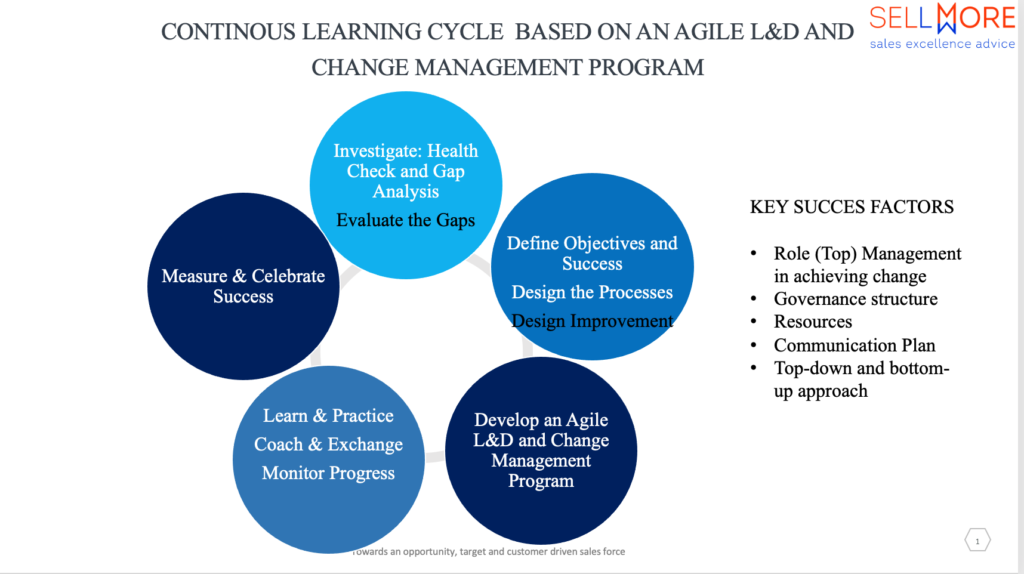
- Important to focus on embedding the change in the organisation, ‘make it stick’. A lot of examples on how to do this have been given. What works well in large/global organisations is the creation of ‘Implementation Coaches’ who participate in team meetings, join sales reps/account managers to customers and identify needs for further development for both the sales teams and leaders. Or coaches who coach your sales leaders on improving their leadership capabilities. Capabilities which were defined as key succes factor for successful commercial and digital transformations/changes. And as mentioned in previous blogs, it all contributes to create a continuous learning environment: